Made with in Raleigh, NC, USA
© Our Wave 2026. All rights reserved.

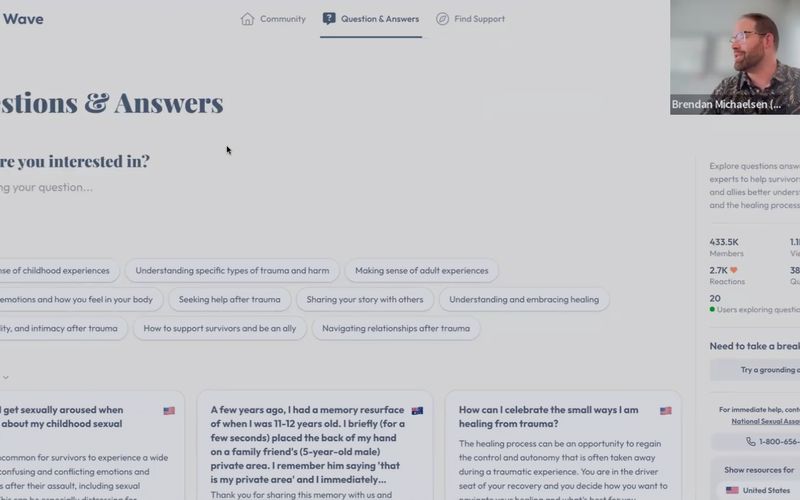
We launched our first survivor Q&A tool, which helps our team respond more quickly and consistently - while every answer remains grounded in human care, judgment, and empathy.
We onboarded a new CPA firm and completed our first-ever financial audit, strengthening transparency and trust.
We introduced dynamic feeds that elevate diverse survivor voices and provide topical recommendations.

We re-released survivor content in Japanese and built the foundation for Spanish, expanding access across cultures.

We secured pro-bono legal partners and engaged a paid marketing agency, strengthening our operational backbone.
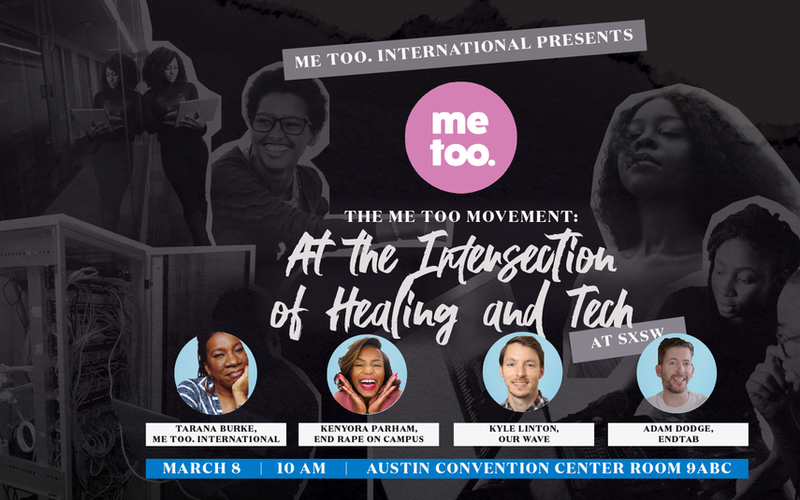
We took the Our Wave mission to SXSW 2025, sharing our work, impact, and vision with a global audience at one of the world’s most influential technology and culture conferences.
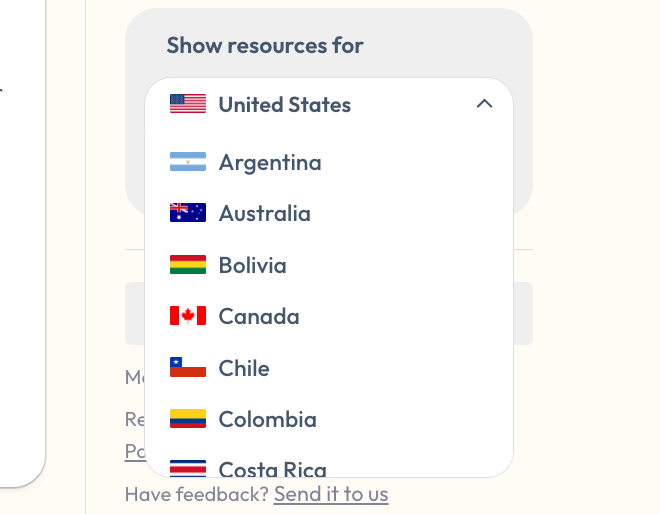
We validated helplines and survivor resources across 28 countries, dramatically expanding global support.
In collaboration with the Institute of Trauma Recovery, we launched Our Wave Japan and Healing in Color.
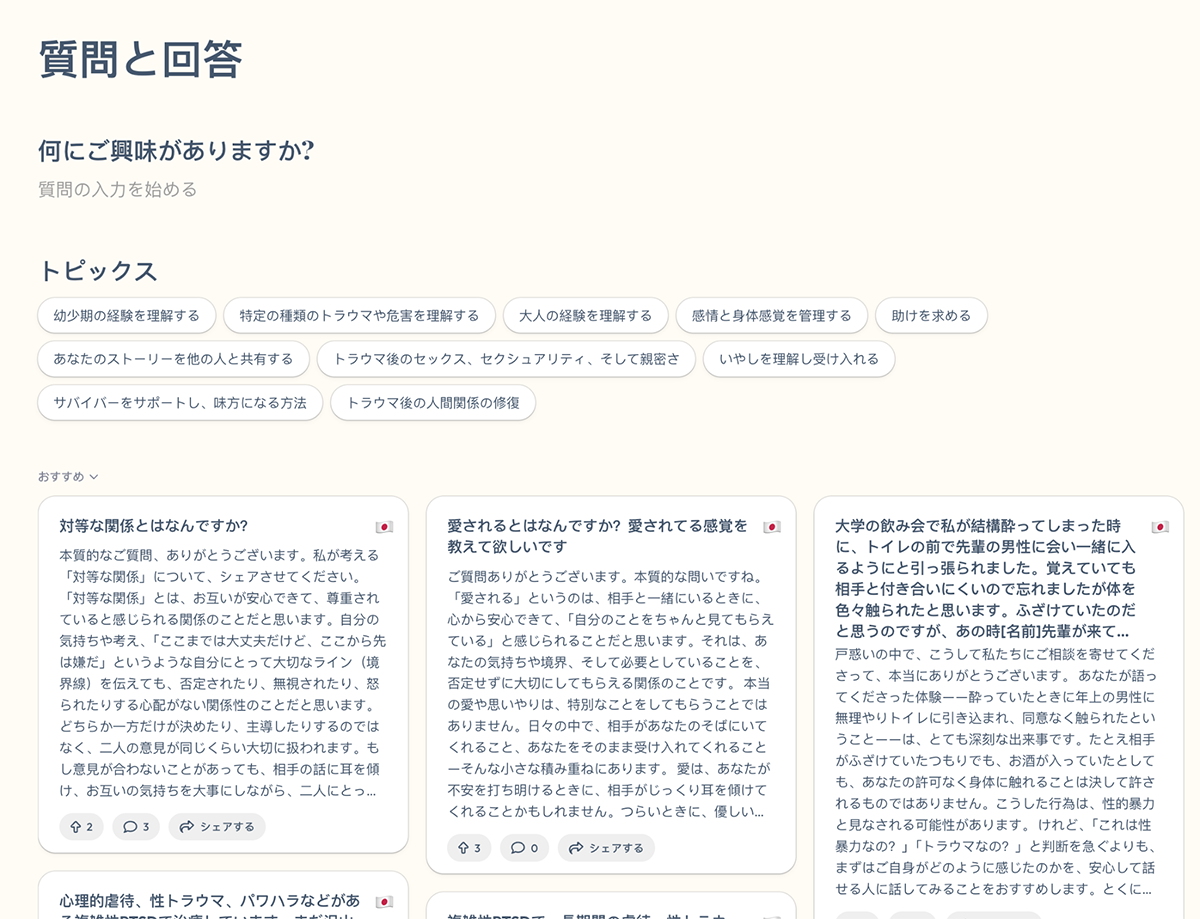 Explore Our Wave Japan
 We updated ethical AI, child protection, onboarding policies, and formalized a board-led compensation committee.
We launched a reimagined community where education, resources, and connection come together securely for survivors.
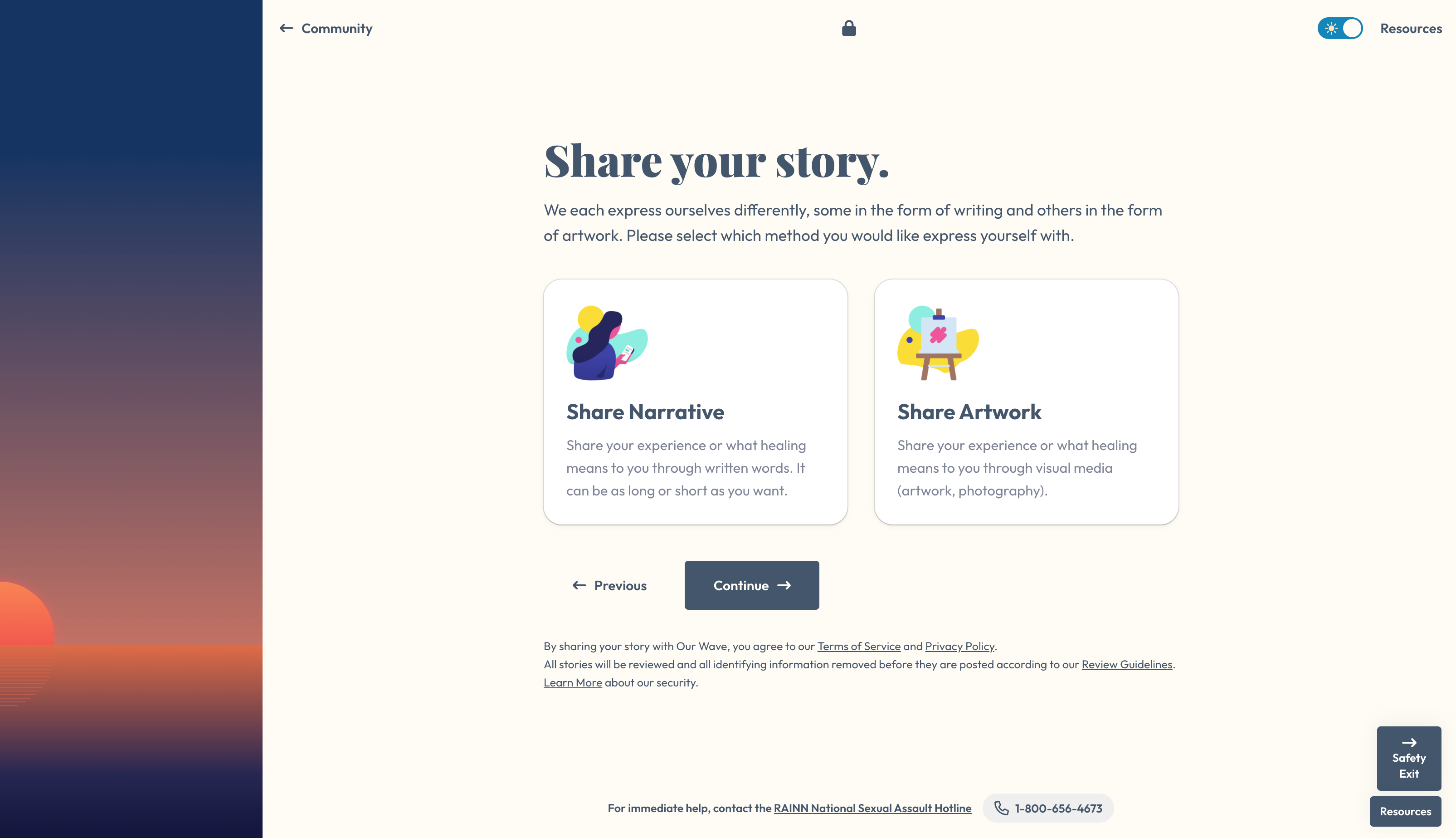 Explore the community
 We expanded from a small, scrappy team to nearly 20 people, bringing on new leadership, research, and operations talent to support our growing impact.

We launched the Trey’s Law Community with Philips Foundation following landmark legal change.
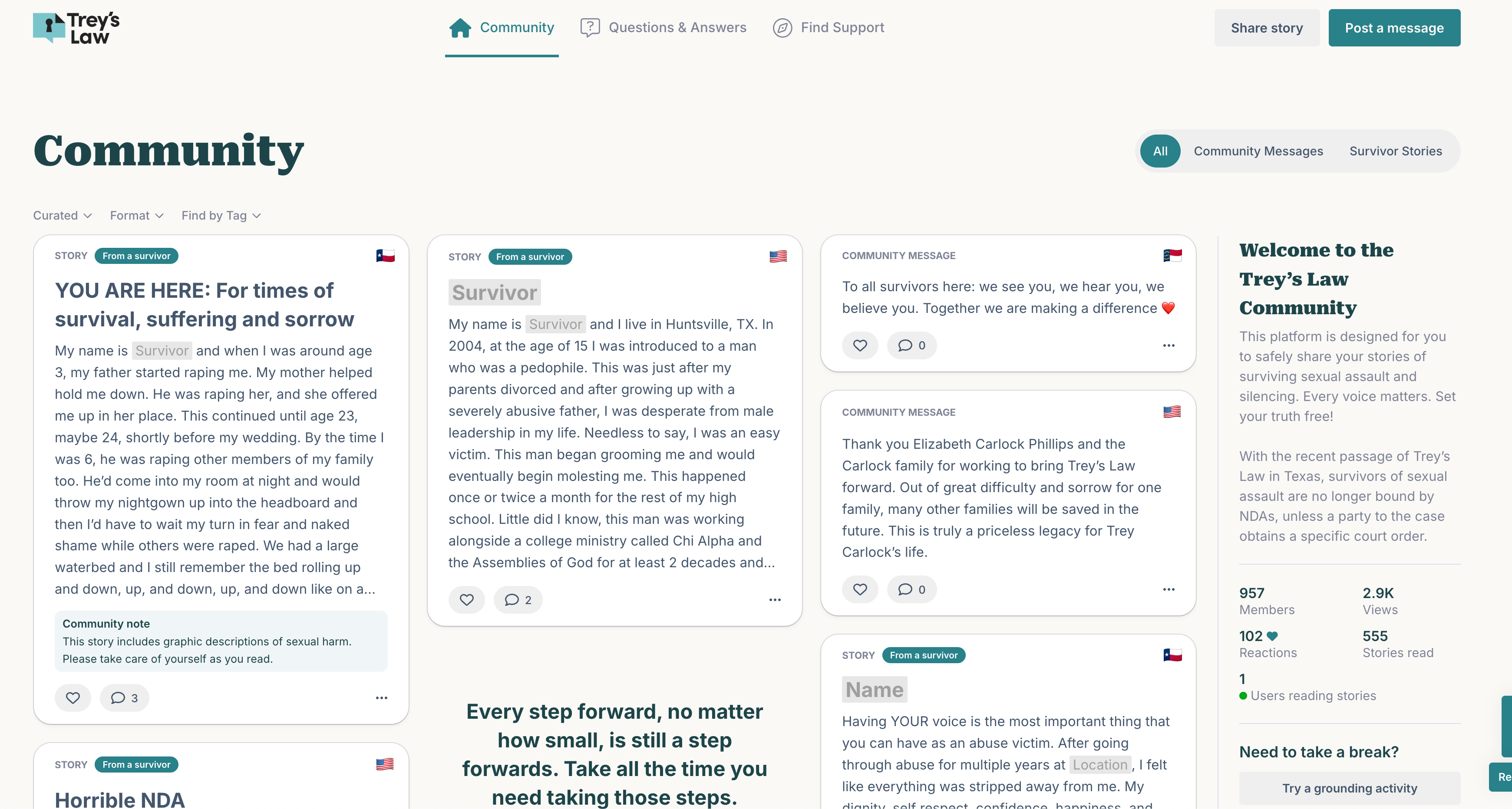 Visit Trey's Law Community
 We welcomed new board members with deep expertise in finance, marketing, and survivor-centered leadership, strengthening Our Wave’s strategic direction and long-term sustainability.

We launched Resource Auditor, a new product that helps partners automatically review and improve survivor resources across regions and languages.
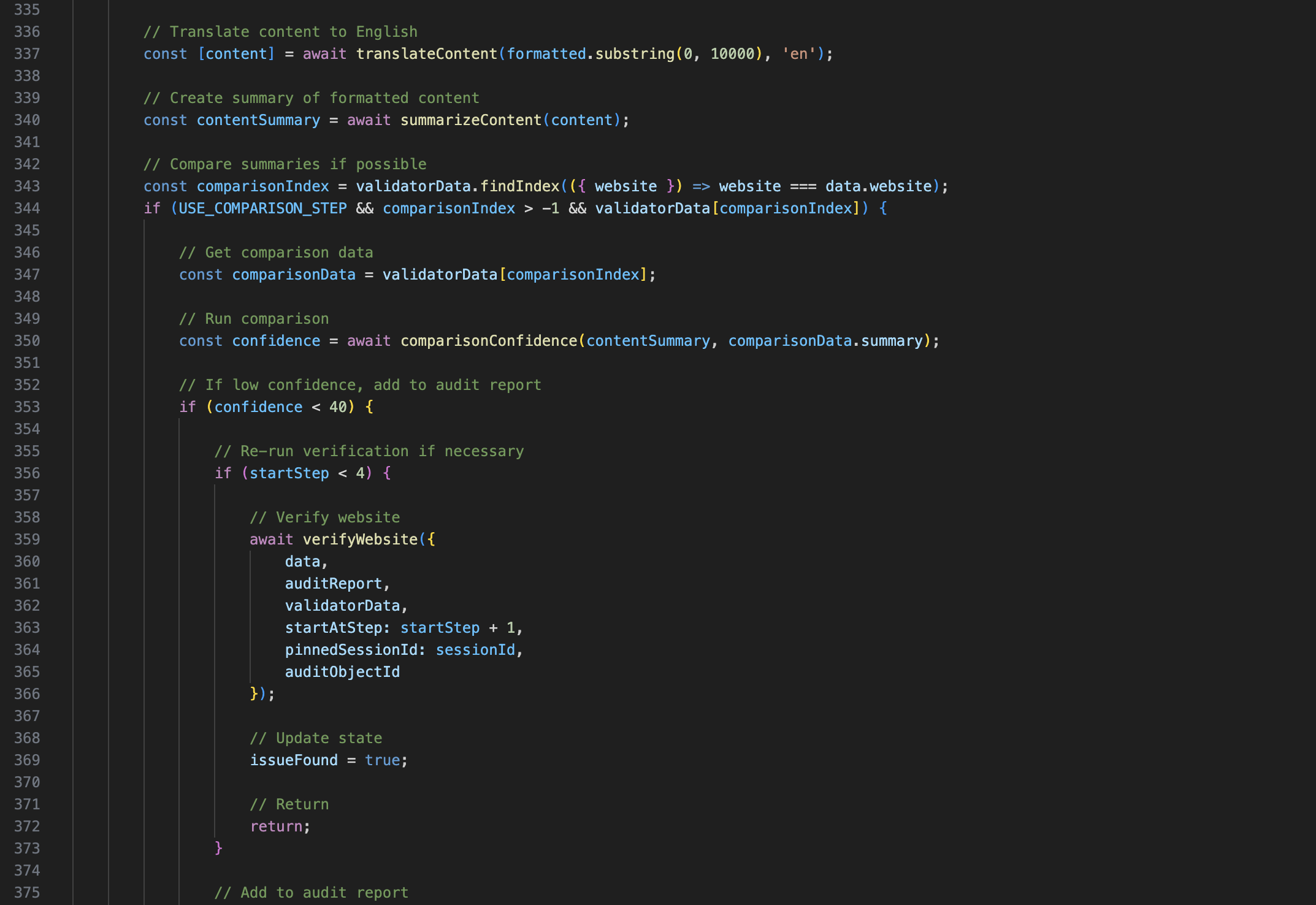
We partnered with the Nursing Network on Violence Against Women to present an in-depth webinar on building digital healing spaces, showcasing the Our Wave platform and survivor-centered research strategies.
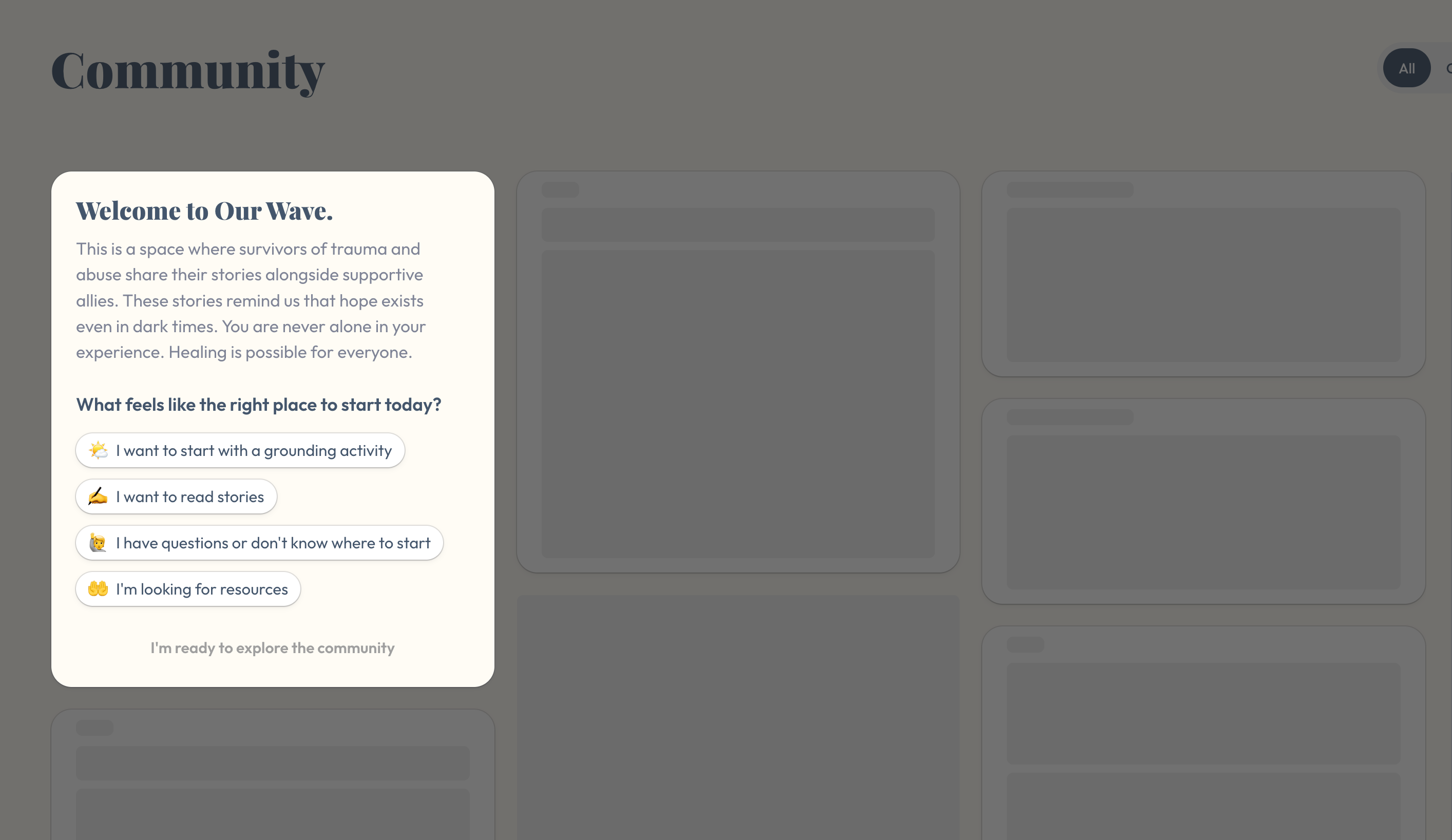
We rebuilt our community introduction experience with grounding activities and clearer pathways.
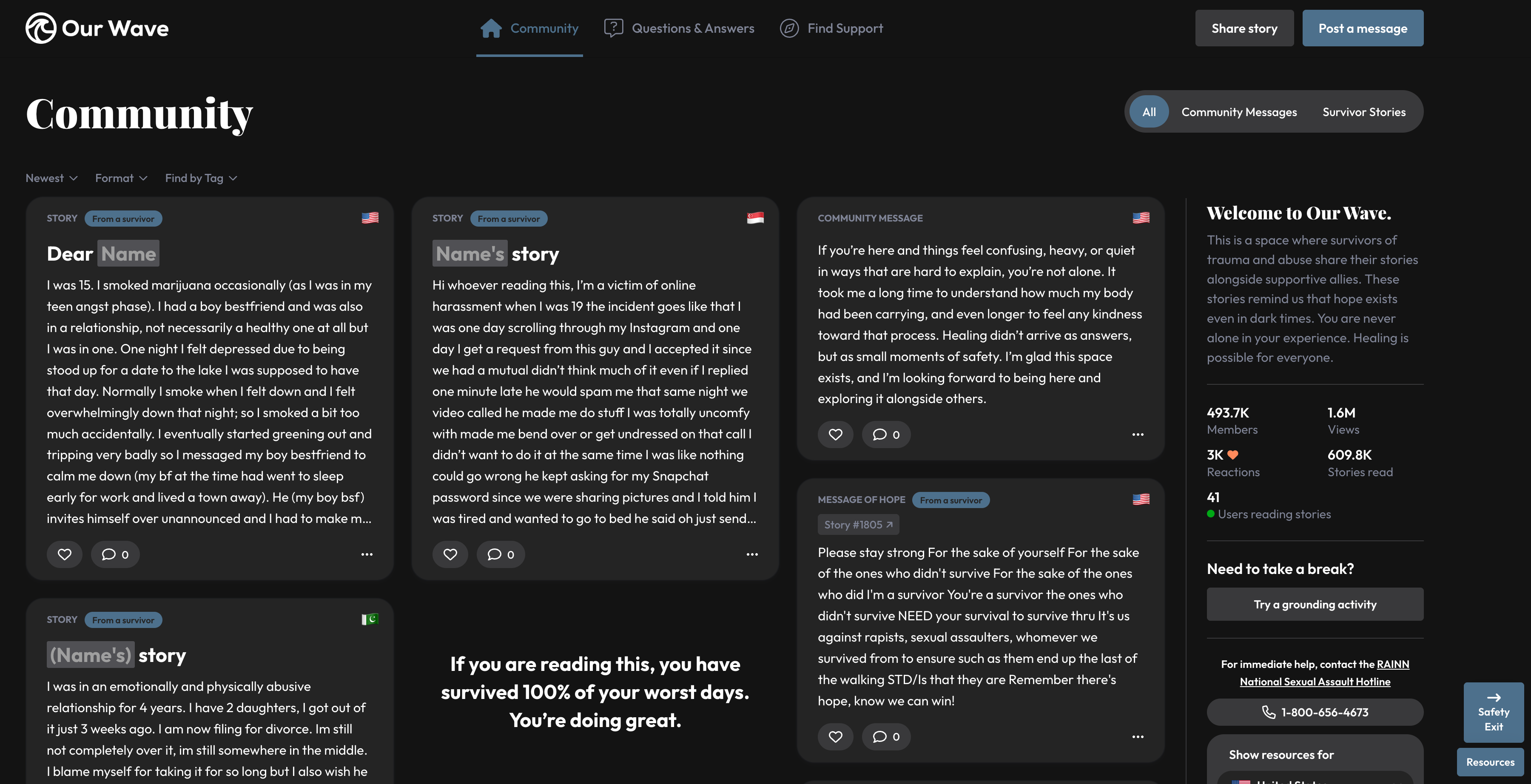
We launched Night Mode, making Our Wave gentler and more accessible during late-night moments of need.
We closed the year with new funding committed for future years, a global community across 73 countries, and unprecedented survivor impact.
Thank you so much for trusting us with this extremely difficult question. Please know you are not alone and this does not invalidate the trauma you experienced. Arousal during sexual assault is a possible, but involuntary physiological response that does not imply consent or enjoyment. Resist the feelings of shame and self-blame that you are feeling. It is not your fault and your experiences are valid.
Survivors can experience a wide range of confusing and conflicting emotions and sensations after their assault, especially if they believe they experienced sexual arousal. Sexual arousal is a physical response that can occur even in the absence of sexual desire or consent. Arousal can be caused by fear, excitation transfer, nerve stimulation, or other factors. It is possible that your body's natural response to physical stimulation was triggered during your experience, even if those feelings are not wanted or desired.
To bring forward some research, of those who report sexual violence, it is estimated that around 1 in 20 people also describe experiencing orgasm. But the true numbers are likely much higher. For example, in a 2004 review paper, a clinician reports, “I (have) met quite a lot of victims (males) who had the full sexual response during sexual abuse…I (have) met several female victims of incest and rape who had lubrication and orgasm.” This further emphasizes that this is something many people struggle with, and there is nothing to be ashamed of.
If you are struggling with these feelings, it may be helpful to seek support from a mental health professional who specializes in trauma and sexual assault. I know it can feel embarassing to bring this up to your therapist, but if they have a background in sexual trauma, this is probably something they have heard before from other clients. Trained mental health providers can help you process your experiences and develop coping strategies to manage these difficult emotions. If you feel your therapist will not understand, perhaps you would benefit from some complementary support from others who are more knowledgable about the diverse ways trauma and violence can manifest. You do not need to go through this alone.
Thank you for asking this tough question. We are here for you if you need us.

Thank you for sharing this memory with us and seeking clarity about it. The confusion and concern you are feeling are completely understandable, and it shows your care for others that you're reflecting on this experience thoughtfully.
Your therapist's assessment aligns with what many professionals would consider about this situation. What you're describing appears to be a brief moment of childhood curiosity rather than COCSA or criminal behavior. Several factors support this. For example, the contact was very brief, you immediately stopped when the other child expressed his boundary, there seemed to be no force or manipulation involved, and you never repeated the behavior.
Childhood sexual curiosity is developmentally normal, even when there are age differences involved. Children often explore through touch and observation as they try to understand bodies and differences. The key distinguishing factors that separate normal exploration from concerning behavior include the presence of coercion, repeated boundary violations after being told to stop, or behaviors that cause distress or harm.
Your immediate response to his boundary-setting shows that your childhood curiosity was not driven by harmful intent. You respected his "no" instantly and completely. This is actually a positive indicator that you were engaging in typical childhood exploration rather than problematic behavior.
The exposure to pornography at a young age likely did increase your sexual curiosity, as it does for many children. However, this doesn't mean your actions were predatory or criminal. You were still a child processing confusing information you weren't developmentally ready for.
Many adults carry shame about childhood moments that seem inappropriate through an adult lens, even when those moments were within the range of normal childhood development. The fact that this memory troubles you demonstrates your moral awareness and empathy, not evidence that you did something seriously wrong. Thank you for reaching out to us. We hope this helped ease your mind.
Our Wave depends on your generous contributions for our continued success. Give today and support us as we work to support survivors of sexual harm and domestic violence.
Read stories Give todayUpdates, events, and ways to help out. Directly to your inbox.
 Ireland
Our Wave is a 501(c)(3) nonprofit organization and an anonymous service. For additional resources, visit the Our Wave Resources Hub. If this is an emergency, please contact your local emergency service.














66 comments