
SXSW 2025: The Me Too Movement: At the Intersection of Healing and Tech
March 8, 2025
March 8, 2025
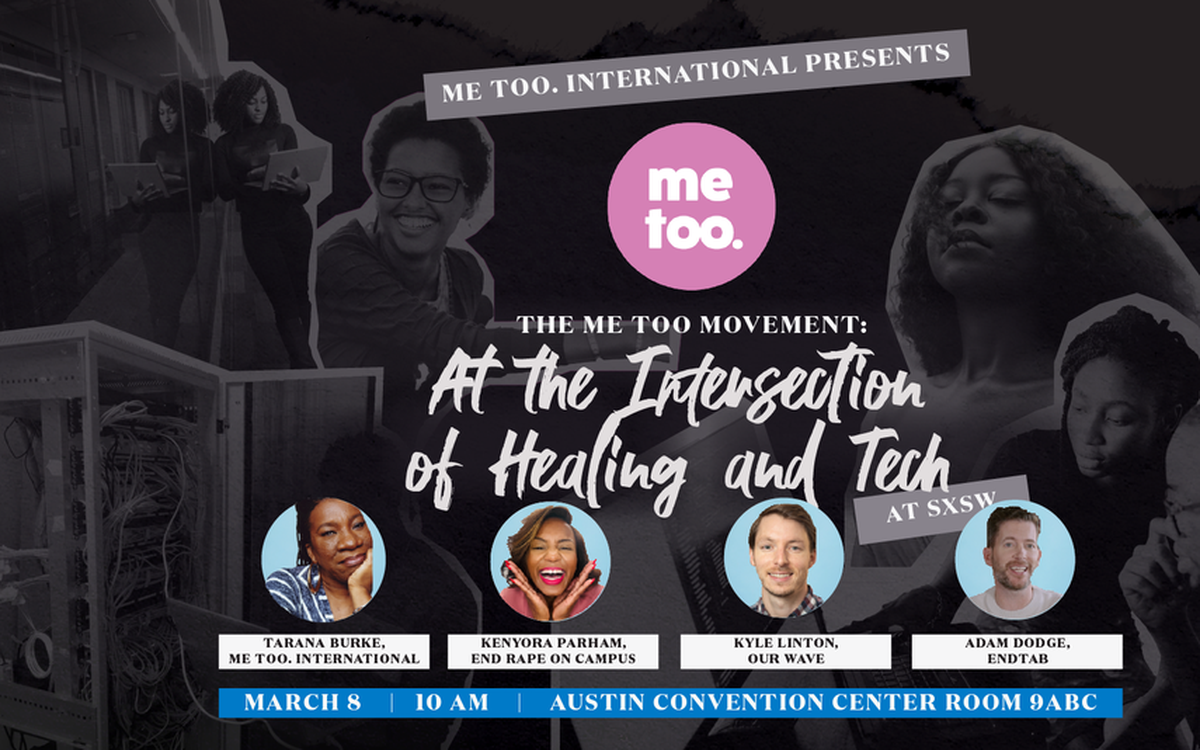
At SXSW 2025 in Austin, Me Too International hosted a panel on how technology can support survivors of sexual violence and help prevent it. Our Wave co-founder and executive director Kyle Linton joined Kenyora Johnson, CEO of End Rape on Campus, and Adam, a digital safety advocate who founded an organization working to end technology-enabled abuse. Nearly a decade after #MeToo went viral, the panel asked how digital tools can shift attention from sensational headlines to real support for survivors.
Kyle Linton described Our Wave's work as building online spaces where survivors can share, find others who describe their experiences in the same words, and reach resources for healing. He explained that trust has to come first, because many survivors arrive skeptical after the hardest moments of their lives. For Our Wave, that means giving survivors full control over what they post and being openly clear about what data is collected and how it is used. Linton added that the platform is shaped with partners and with direct feedback from survivors, so the work stays survivor-informed.
The moderator noted that Me Too International's online healing space, Survivor Sanctuary, includes Our Wave's technology so people have a place to express what they are going through. Later, Kenyora Johnson spoke about End Rape on Campus's partnership with Our Wave. She valued that stories are anonymous, that identifying details are removed, and that a storyteller can take their story down at any time.
Adam outlined what digital safety requires: access to your own devices, control over your accounts, and the freedom to exist online without fear. He warned that abusers are using new AI tools, including apps that create fake nude images, and that AI companion apps often fail to protect deeply personal disclosures. He urged educating men and boys rather than only reacting after harm. Kenyora Johnson shared how End Rape on Campus's Campus Accountability Map and Tool turns scattered college policies into clear, survivor-centered answers. She called Title IX a floor rather than a ceiling.
With federal funding for rape crisis centers and other frontline services in question, Linton said online spaces can step in alongside in-person care. This matters most for people without a support network close to home. He described healing as starting with processing and naming what happened, and said Our Wave hopes to use data to make the path to healing clearer. He also pointed to his colleague Dr. Laura Sinko's research on how survivors progress through healing. Linton acknowledged that AI carries real risks, but he sees room for positive uses guided by careful human oversight.
Asked how he stays hopeful, Linton said his view of survivors has shifted from fragile to strong. In his words to the SXSW audience, "survivors are some of the most resilient, powerful people."
1:30 The moderator introduces the panel and each organization.
6:15 Kyle Linton connects the #MeToo movement to Our Wave's online tools for survivors.
9:11 The moderator describes Survivor Sanctuary and its use of Our Wave's technology.
14:06 Panelists discuss how they think about healing and safety in their work.
16:39 Linton explains why trust, data control, and transparency come first.
22:47 Adam describes emerging AI threats, including fake nude image apps.
30:33 Linton reflects on funding uncertainty and the role of online community.
46:46 Panelists share practical ways people can support survivors.
59:12 Linton talks about what keeps him hopeful in this work.
1:07:30 Kenyora Johnson describes privacy features of End Rape on Campus's partnership with Our Wave.
Listen to the full session from SXSW 2025.
Our Wave depends on your generous contributions for our continued success. Give today and support us as we work to support survivors of sexual harm, domestic violence, and child abuse.
Read stories Give today